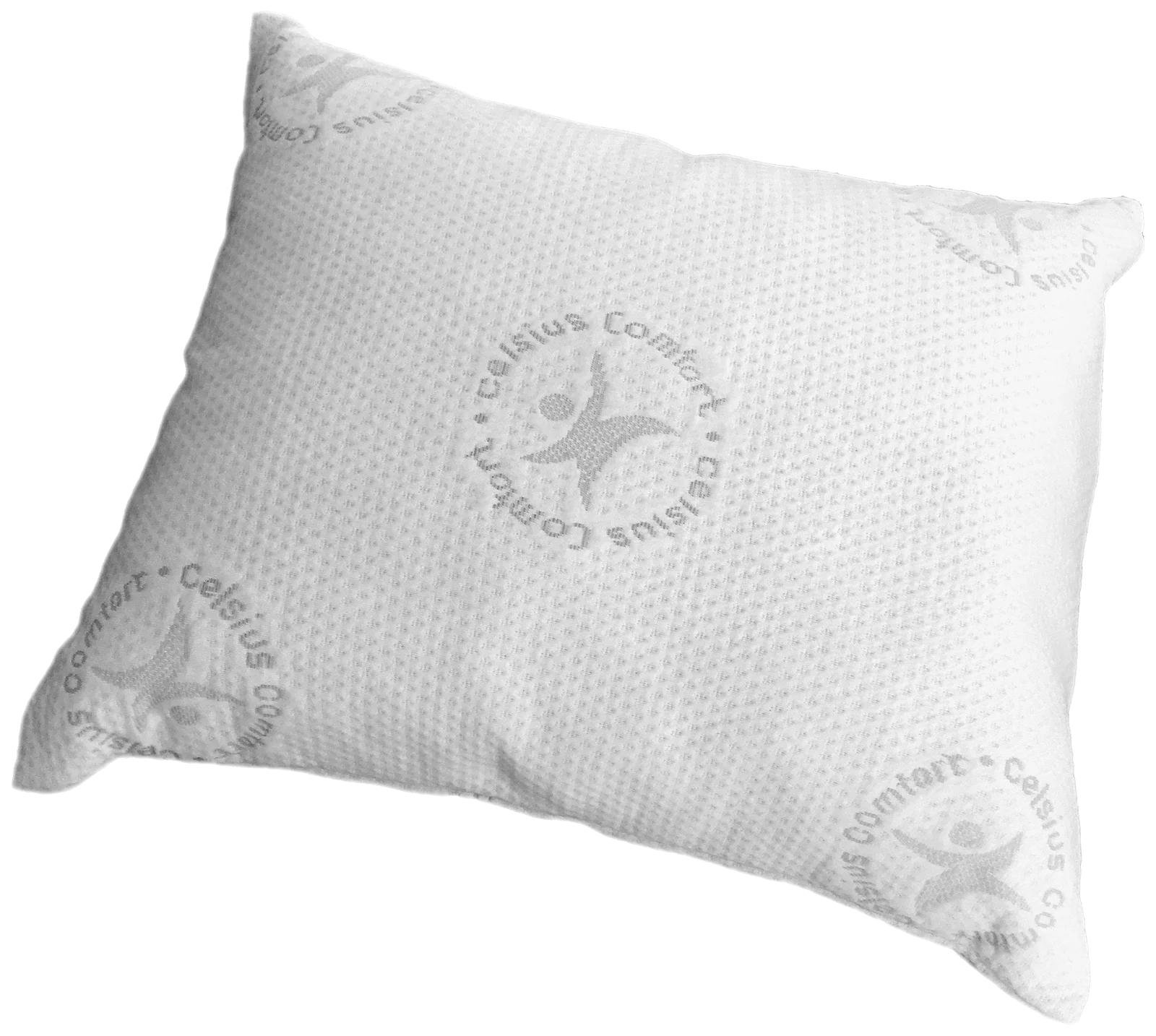
Celsius Comfort
Celsius Comfort
Adjustable viscoelastic pillow.
From technology created to manage extraordinary forces to viscoelastic comfort designed around the human body.
Discover the storyWhen humans prepared to travel farther and faster than ever before, the forces acting on the body became an engineering challenge of their own.
During launch, astronauts could be exposed to powerful acceleration forces. NASA’s research into human protection, energy absorption and advanced cushioning contributed to the development of new materials and solutions. Among these developments was Temper Foam – an early viscoelastic material that NASA has later described in connection with protecting astronauts from the forces experienced during liftoff.1–3
The idea was remarkably simple: instead of allowing pressure to concentrate in a few places, create a material that could respond to the body, absorb energy and distribute load across a larger surface.


A material developed around pressure, energy and the human body did not remain in aerospace.
The same fundamental properties that made viscoelastic foam interesting under demanding conditions – its ability to respond to pressure, conform to shape and distribute load – also made it relevant wherever the human body meets a surface.
Celsius® Viscoelastic Foam is a temperature-sensitive viscoelastic material. It responds to the combination of body heat and pressure, allowing the material to gradually conform to the shape resting against it.4
Remove the load, and the material slowly begins to recover its original form.
Press and hold on the surface →
The material becomes more responsive where warmth meets the surface.
Instead of concentrating pressure at individual points, the material conforms around the body and helps distribute the load across a larger surface.
When pressure and warmth are removed, the material gradually returns towards its original form.
No two bodies are exactly alike. So why should one fixed level of support fit everyone?
Shoulder width, body shape, mattress firmness and sleeping position all influence how much support feels right. Celsius Comfort brings the properties of Celsius® Viscoelastic Foam into products designed around individual comfort.
The pillow arrives fully filled. If it feels too high or too firm, filling can be removed until the height feels right. Keep what you remove – it can be added back later if your preference changes.
The result is not one predetermined pillow height, but a pillow that can be adjusted to the person sleeping on it.
Adjustable viscoelastic pillow.
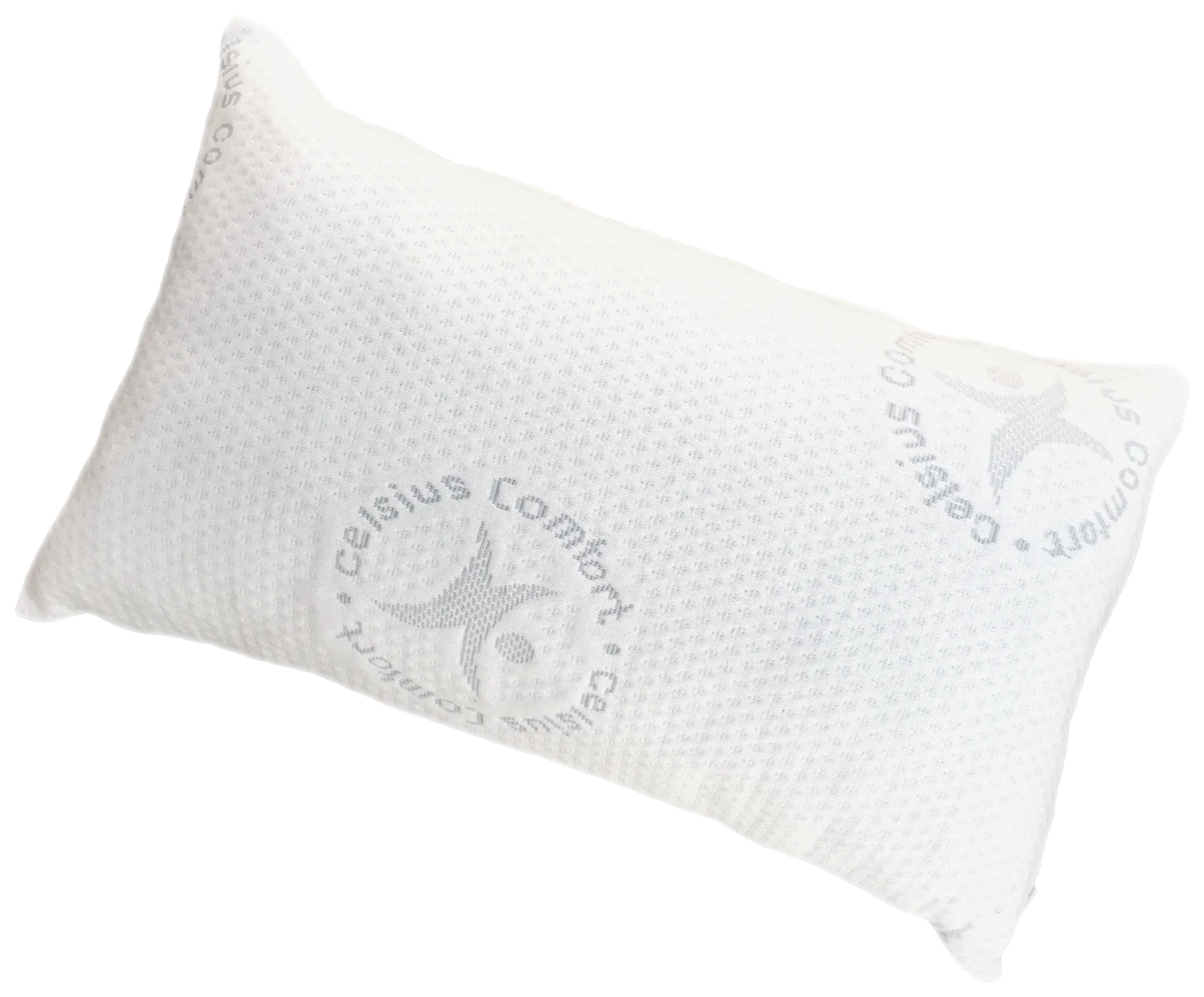
The same viscoelastic comfort in a smaller format.
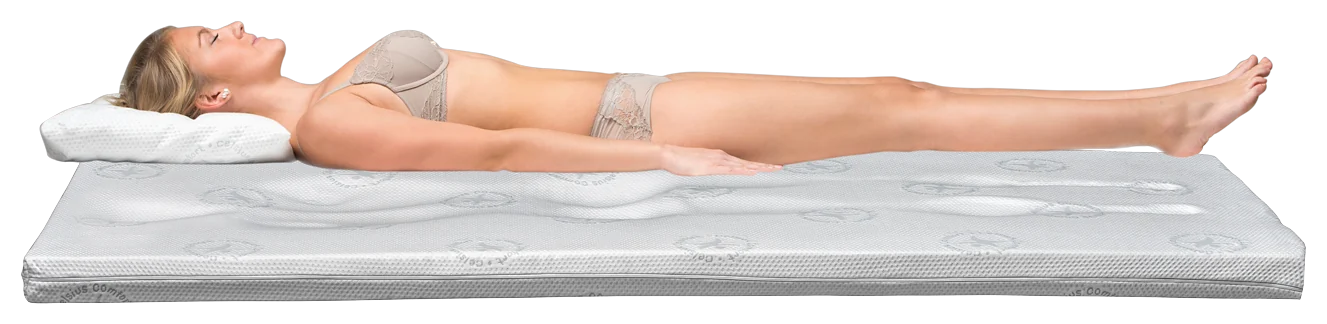
A 7 cm viscoelastic comfort layer designed to conform around shoulders, hips and the contours of the body.
The human body is not flat.
When we lie down, areas such as the shoulders and hips carry more of the load than others. On a firm surface, these areas meet greater resistance.
A viscoelastic comfort layer allows prominent areas of the body to sink further into the material while the surrounding surface continues to provide support. The result is a larger contact area and a more distributed load.
Support is not about making a pillow higher or softer. It is about finding the height that fits you.
Illustration · side-lying, seen from behind · final version: anatomical 3D illustration
Shoulder width, sleeping position and the mattress beneath you all influence the distance between the head and the sleeping surface.
That is why Celsius Comfort is adjustable. The goal is not to make everyone sleep at the same height. The goal is to make the pillow adapt to the individual.
Sometimes, position matters.
Snoring occurs when airflow through the upper airway causes surrounding tissue to vibrate during sleep. The position of the head and neck can influence the geometry of this airway.
Research suggests that changing head and neck position can reduce snoring in some people, including studies using specially designed pillows and head-positioning devices.5–7
Celsius Comfort has not been tested in these studies.
What Celsius Comfort does provide is adjustable support designed to help the head and neck maintain a comfortable position through the night.
Over the years, many Celsius Comfort users have told us that they experience less snoring when using the pillow. Individual experiences vary, and snoring can have many different causes.
Loud snoring accompanied by pauses in breathing can be a sign of sleep apnoea and should be medically assessed.
We spend extraordinary amounts of time thinking about the mattress beneath us. Yet the pillow directly supports the head and neck for thousands of hours of sleep.
Something used every night deserves more thought than something used occasionally.
What you sleep on matters.
NASA images are used for historical illustration. Their use does not imply endorsement by NASA.